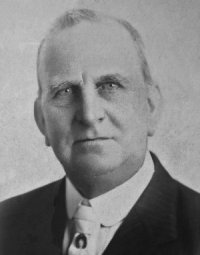
His father had served under Lord Hill in the Peninsula War (see the Irelands) against the French in 1811-1814) and then held a number of government posts including that of magistrate and surveyor of Irish ports. We do not know for sure where Richard was born or grew up - the first record of any place of residence appears on 20 October 1831 when just before his 16th birthday, he entered Trinity College, Dublin (1).
Richard's forebears migrated to Ireland from Lancashire during the reign of Charles 11. (See the Irelands.) The Irelands were typical ascendancy figures, privileged by education, position and property, and following the traditional avocations of their class; the army, the church, the law and the civil service (2). We do not have information about Richard's early education, but we do know that he spent six years at Trinity College before graduating BA in 1837.
He evidently had no doubts about the career he was to pursue because in 1838, the year after his graduation, he was called to the Irish Bar along with two others, Redmond Barry and William Stawell, (3 and 4) whose names were to be implanted in Australia's legal annals. All three were to meet again in distant Australia, one as a Judge, one as Attorney-General and Crown Prosecutor, and the third, R.D.Ireland, who was to become one of Victoria's most noted criminal barristers. They were to be leading figures in the trial that followed one of the key events in our national history, the Eureka Stockade.
On July 25, 1840. two years after being called to the Irish Bar, Richard Davies Ireland married Sophia, the daughter of the Reverend Thomas Carpenter Carr, Church of Ireland rector of Aghaboe, a tiny hamlet in County Laois (5) in the centre of Ireland (See the Carrs.)
If Richard took the rather predictable step of marrying the daughter of a Protestant clergyman, the same, as John Ireland says, cannot be said for the other members of his family; two of his father's cousins who lived in Galway town had married Catholics and converted to Catholicism. It is possible, as John Ireland points out in his study, that this circumstance could well have contributed to the natural sympathy Richard was to show towards Catholics and his later natural alliance with Irish Catholic interests in the Victorian parliament.
During the 1840s the practice of the young Irish lawyer apparently thrived, for it was not long before he had established himself in chambers in Dublin's Upper Fitzwilliam Street, perhaps the best address in the city. The fact that the Irish Bar was overcrowded - it had already caused both Barry and Stawell's departure for Australia - adds to the impression that Richard Ireland must have made his mark in the law.
It was about this time that he became immersed in the political activities that were to be another distinguishing feature of his life and career. The movement he took up was the great political campaign for the ending of the union of Ireland with England and Scotland. When and how he became involved in this (predominately Catholic) movement is not clear, but one influence was probably "The Nation" newspaper, which drew a number of young Protestant professional men to the nationalist cause. They, along with Catholics such as Charles Gavan Duffy (7) - eventually to become a household name in Australian history - persuasively argued the case for Irish independence.
"The Nation" group eventually formed itself into an organisation called the Irish Confederation, but it has become known to history as the Young Ireland movement (6). At its founding meeting in January 1847, Richard Ireland is mentioned as being among the hundred or so seated on the platform. He was soon in the thick of the nationalist movement and it was one of the main factors that was to lead to his departure from Ireland.
Events gathered momentum when two of the more militant leaders of the movement, John Mitchel a d Thomas Francis Meagher were charger and tried for the new crime of treason - felony, with Michael eventually transported to Van Diemen's Land. The movement's leader, William Smith O'Brien, and a number of others were also arrested, tried and transported. Charles Gavan Duffy was arrested but, despite five attempts by the Crown, was never convicted. "The Nation", the focus of the repeal movement but deprived of so many of its leaders, collapsed.
Richard Ireland was soon to follow many of his companions to the Antipodes, though in his case not by transportation, but by his own decision to emigrate.
He arrived in Melbourne on board the Ben Nevis on January 3, 1853 with his wife Sophia, their eight children and Sophia's sister Selina. He and his wife travelled cabin class while the rest of the party were in steerage (8).
According to family lore, the immigrants spent some time in the tent city of Emerald Hill, South Melbourne, before moving into a house in St Kilda. On February 24, 1854, just eight weeks after his arrival in Melbourne, Richard Ireland was called to the Victorian Bar.
Little is known of how he established himself in practice in Melbourne, but he is next heard of in July of the following year, 1854, in circumstances that show he had lost none of his former Irish national allegiances.
The occasion was a testimonial dinner to Smith O'Brien, Martin and O'Doherty, all three recently released on conditional pardons from their sentences of transportation to Van Diemen's Land. Just three months after the dinner an event took place that was to lead to the
Eureka Stockade and was to be decisive in Richard Davies Ireland's legal career.
The Eureka Stockade was the final boiling over of long-pent-up frustration and resentment among the thousands of miners from all parts of the world who had congregated on the Ballarat goldfields at the height of the gold rush (A). The uprising was triggered when one of the miners was murdered by, as they believed, a corrupt, greedy hotel-keeper and ex Norfolk Island convict James Bentley. Bentley's hotel was notorious as a den of prostitution and crime but his villainy received the tacit support of the authorities, since his licence was regularly renewed by police magistrate John D'Ewes. D'Ewes was said to have got a regular cut of the hotel's profits in return for his protection. That one of the miners should apparently be sent to death by a man of this kind was the final straw in a saga of discontent and dissatisfaction with the administration of the Ballarat goldfields, most of it arising from the compulsory mining licence (B).
It was on December 3, 1853, that the miner, a Scotsman James Scobie, who had tried to break into the Eureka Hotel during a drunken binge, was murdered not far from the hotel. As far as the miners were concerned, there was no doubt who done it: James Bentley, the "protected" hotel owner. And their feelings only intensified with an unsatisfactory inquest by magistrate D'Ewes, widely believed to be corrupt.
Events gathered steam: the hotel was burnt down. From thousands present at the burning three miners were arrested as ringleaders and duly brought to trial in Melbourne on November 21, 1854.
Their defence counsel was Richard Davies Ireland whose appearance without fee was apparently arranged by Ballarat lawyer (and later judge) Thomas Spence Cope, whose thriving legal practice in Ballarat put him in touch with the miners and in sympathy with their point of view. It appears that Cope arranged Melbourne counsel for a number of Ballarat clients, because, while Richard appeared for the three miners on the 21st, he appeared the day before for a fee, for James and Catherine Bentley when they were charged with murder.
The case against the Bentleys was clear, though Richard struggled manfully to cast doubt on it. As a result, Bentley was found guilty of manslaughter, not murder, and sentenced to three years hard labour.
One of the interesting features of the miner's case was Richard's combative style, drawing him into frequent clashes with the prosecutor (Attorney-General) William Stawell.
"The diggers had been baffled for 14 days," he told the court. "Serious matters of life and death were not to be thus trifled with ..... the law was made for the people, not the people for the law; and when the people are oppressed and tyrannised over, it becomes them to right themselves....."
Unfortunately, Ireland's stout defence of the miners earned him a rebuke from the "Argus" newspaper which said he made a very able speech "but it was not a wise one".
"It was a hustings harangue, not a piece of forensic pleading. He risked the whole case .... in order that ....he might have an opportunity of abusing the government".
There were all the ingredients for natural antipathy between Stawell and Ireland. Stawell (4) would have resented Ireland's attack on the government, and as an ascendancy Irishman without Ireland's populist sympathies, would have regarded Richard Ireland as a traitor to his class and a dangerous radical.. Richard, in turn, may well have seen Stawell as a dreadful example of the ascendancy Irish who helped imposed English government on Ireland and were doing the same thing in Australia. It would have come as no surprise to Stawell to find Richard at the head of the team of barristers who met him on the first day of the state trials, when the indictments for high treason were brought against the 13 charged over the Eureka Stockade.
The defence scored a victory at the outset by ensuring that the trial of John Josephs, a black American, came first. This gave the defence the ability to lay the groundwork for the later defendants by pointing out the incongruity of a negro "making war on our Lady the queen", as the treason charge said.
The trial unfolded, with all, except Manning, the newspaper correspondent, exonerated. The case showed that Ireland's mastery of the law matched if not equalled that of the Attorney-General, his cross-examination skills were of a high order and showed his detailed knowledge of what happened at Eureka. In this he may have been helped by his brother-in-law Charles Warburton Carr, (See the Carrs) who was appointed secretary to the goldfields commission set up by Governor Hotham in November 1854 after the burning of the Eureka Hotel.
At all events,
the Eureka trials were to establish Richard Davies Ireland as the foremost criminal lawyer in the colony. One of the first two QCs in Victoria - he took silk with Sir Archibald Michie in 1863 - Ireland has gone down in the history of the Victorian bar as one of its greatest advocates, eloquent, humorous, a powerful jury man and a daring courtroom strategist.
 |
| The 13 men indicted over the Eureka rebellion: 1. Timothy Hayes, 2. James MacFie Campbell, 3. Ruffaello Carboni, 4. Jacob Sorenson, 5. John Manning, 6. John PHelan, 7. Thomas Dignam, 8. John Joseph, 9. James Beatie, 10. William Molloy, 11. Jan Vennick, 12. Michael Tucehey, 13. Henry Reid. (From the Age, March 10, 1885). |
 |
| Aquittal of Ballarat rioters in 1885. (From the Illustrated Australian Press, June 1887). |
Side by side with his successful legal career, Ireland was also to pursue a career in Victorian politics, in which by contract he can be said to have performed with less than shining ability, partly through personal attributes probably more suited to the bar, and partly through the turbulent nature of politics at the time.
The year 1855 marked the start of a political career that was to span more than 10 years. During that time he would represent four electorates: Castlemaine, Maryborough, Villiers and Heytesbury (Warrnambool) and finally Kilmore. It was also to lead him into ministerial office three times, as neither attorney-general or solicitor-general. His first attempt at entering parliament, when he stood for the state seat of South Bourke (St Kilda) was unsuccessful. But the following year, 1856, he stood again, this time in Belfast (Port Fairy). Here again he failed, largely because the previous candidate who initially said he would not stand changed his mind and was returned by a fairly substantial majority.
Something of Ireland's wit was noted in the election campaign. Charged with being an Irishman and a Catholic, Richard told his audience a man might not have a religion but "could not help having a country" and not having been consulted by his mother on the subject of his nativity, he did not consider himself responsible "for having been born in Ireland". He was willing to apologise to the electors for the offensive accident of his birthplace and pledged his honour as a gentleman that "it should never happen to him again if elected their representative".
Ireland next tried Castlemaine in February 1857. It was expected he would romp in, but a rumour that on election he would accept the office of attorney-general in the O'Shanassy Government lost him the seat by a small margin. Unexpectedly, he got another chance: within four months one of the two sitting members for Castlemaine had resigned - and by now the O'Shanassy government had fallen, so no possible association could be imputed.
This time Richard did romp in. He won the "Argus's" praise: "Mr Ireland has found his way at last into parliament .... Mr Ireland has no reputation to establish as an able debater - he carries that with him into the House. If he distinguishes himself as a steady, practical, hardworking member of parliament, he will gain substantial and enviable laurels.
Though scarcely believable by the political standards of our own time, Richard Ireland won the seat without once visiting the electorate during the campaign. And the electors three months later when he finally did make a visit, they even rewarded him with "three cheers for Mr Ireland" for having opposed the O'Shanassy Government's land bill.
Ireland's entry to parliament came at a time of great volatility in political fortunes, with governments rising and falling with great rapidity over the next four years, mostly over one or other of the central issues of the time, manhood suffrage, responsible government and the opening up of land to small settlers. Richard held office twice briefly during this time, once in the O'Shanassy Government (1858-1859) as solicitor-general and then in the Heales government (1860-1861) when he resigned.
When the Heales government fell shortly afterwards, to be replaced by a coalition of opposition groups, led by O'Shanassy, Ireland held the post of attorney-general for two years. (Something of a cloud hung over this period, because some suggested Ireland has resigned from the Heales government only to claim the pension that was due to him as a minister. Others said he could see the government's downfall coming and going helped it occur, and that he had already been made an offer by O'Shanassy that he could not refuse).
Again the
new government was faced with the issues of freeing land to small farmers, and like previous governments it was to meet with failure in its attempts at a solution.
Richard Ireland, as the government's legal spokesman, was to incur more than his share of blame over the failure of the legislation. It all started out on a hopeful note when Minister for Lands Charles Gavan Duffy presented a compromise bill clearly aimed at gaining the support of both squatters and small farmers, as well as gaining the acceptance of the Opposition and the Upper House. Ireland said the bill was a compromise - because that was the only way to settle the matter. And he promised that if passed, the bill would be accepted "by all classes who were interested in the final settlement of the question".
The legislation appeared to have the best of intentions: to put more small farmers on the land and at the same time to limit the tenure of the squatters and to extract as much government revenue from them as possible (9). But the squatters soon found ways round the law, including the use of "dummies" to take up selections on their behalf while they continued to hold large tracts of land. Sadly, it was Richard Ireland who took the blame, largely because it was believed that as the government's legal officer, he had deliberately failed to pick up and correct essential points of drafting that allowed the law to be evaded. Duffy, not averse, as John Ireland remarks, to finding others to bear the blame for his own failures, was the most outspoken of his critics, but before long all Richard's colleagues were to forsake him and flee. He had become the scapegoat for the failure of the act (10).
Duffy, in his autobiography, was to put the final nail in Richard's political coffin. "Mr Ireland," he said, "had not much character to lose, but that little was lost forever .... a signal instance of public justice".
It marked Ireland's political demise and he was told not to bother standing again for his seat of Kilmore. It was an unfortunate and undeserved end to his political career, because as John Ireland shows in his study, the whole debacle over the land legislation was actually the result of misunderstanding (11). Far from being the schemer he was portrayed by Duffy, says John, "you wonder whether he was not an innocent looser in the political jungle".
It was at the Bar, rather than in politics, that Richard Davies Ireland's robust, colourful character and genius as an advocate was to shine to the full.
In his history of the Victorian bar, A Multitude of Counsellors, Arthur Dean says Ireland was the "greatest advocate of the day" and despite his years in politics, it was as an advocate that he achieved and still holds his fame (C). As the colony's outstanding criminal barrister, Ireland owed his success to his quick grasp of essential issues, his charm and his expertise in dealing with people. A typical Irish advocate, he was essentially a jury man, says Dean, "quick to see a point and skilful in evading or ignoring one, eloquent and humorous, a master of cross-examination, powerful in invective. He handled a jury as a modeller handles clay: few were able to resist the force of his genius and personality". He had a subtle method of cross-examination that seemed simple and did not give the witness much time to prepare plausible replies. "He threw the witness off his guard by asking one or two questions, seemingly insignificant, that laid the foundation for others, to which convenient answers were assured." If he wanted to find out a woman's age from her own lips, he would ask her if she were married, and how long and how many children she had; and having excited the wifely and maternal pride, and got her committed to time,he next came with the direct question: "And, pardon my impertinence, madam, how old are you?"
He was also a daring courtroom strategist. A typical instance was the occasion when he defended a woman tried in Melbourne for arson. When the case for the Crown had been concluded, Ireland rose and directed his gaze at the Crown Prosecutor. "Is that your case?" he demanded. The prosecutor nodded. "Then, gentlemen of the jury", said Ireland turning to them, "I'll not occupy your time, or trifle with your intelligence by addressing you on behalf of the accused", and hastily gathering up his gown, rolled back in his seat.
The accused was acquitted, without the jury even leaving the box.
He was, as John Ireland says in his study, a Hocace Rumpole, winning on his wits rather than by obscure legal points. Like Mortimer's Old Bailey character, he was a frequenter of winebars (in Ireland's case the Mitre Tavern in Bank Place, Melbourne). Ireland found that a glass or two of stimulant did nothing to dim his powers. In fact he was said to be at his best "when he had taken a stimulant" and during a long argument or speech to the jury he was often given a refresher "of a liquid kind"(D).
While it sounds scarcely credible in the context of the more sober atmosphere of the modern courtroom, this was a time of fast living, in which Melburnians had evidently made up their minds to "drink the wine of life to the lees".
One of the most striking descriptions of R.D.Ireland come from Raffaello Carboni, the Italian born Eureka leader, whom Ireland defended, his counsel, as "heavy with thunder".
"Thick, sound, robust, round-headed as he is, the glance in his eyes is irresistible. A pair of bushy whiskers frame in such a shrewd forehead, astute nose, thundering mouth; that one had better keep at a respectful distance from drakes. His whole head and strong built frame tell that he is ready to settle with anybody, either with the tongue or with fist." (E)
"His eloquence savours pretty strongly of (Irish nationalist leader) Daniel O'Connell and is flavoured with colonial pepper: hence Mr Ireland will always exercise a potent spell over a jury; If he were the Attorney-General, the colony would breathe freer from knaves, rogues, and vagabonds. The "sweeps", especially, could not possible prosper with Ireland's pepper."
"On the reassembling of the court, at three o'clock, Mr Ireland rose to address the jury for the defence".
"The learned counsel spent a heap of dry yabber-yabber on the law of high treason, to show its absurdity and how its interpretation had ever proved a vexation even to lawyers, then he tackled with some more tangible solids".
"The British law", the account goes on, (and here we are not sure if Carboni was accurately reporting Ireland or giving his own views), "the boast of urbis and orbis terrarum, hanged a traitor, until he was "dead, dead, dead", chopped the carcase in quarters, "never mind the stench", then stuck each piece of the treacherous flesh up on top of each gate of the town, where it was left to dry amid the "occasional pecking from crows and vultures ....."
"The whole performance", says Carboni, "to impress the young generation with the fear of God and teach them to honour the king".
"Reflecting then that there were no town gates in Ballarat, Carboni wonders: "How the deuce can they hang up my hindquarters on the gates of Ballarat township?"
The jury, he said, "appeared frightened at this powerful thundering from Mr Ireland", who now turned to argue that if the prisoner at the bar had burnt down all the brothels, "not kept on the sly in Her Majesty's dominions, he would be a traitor", yet if he had left one brothel standing - even in as remote a place as the Sandwich Islands - for "the accommodation of Her Majesty's well affected subjects, then the high treason was not so high".
By this time, according to Carboni, Ireland was getting his point across successfully. The Judge "appeared to me to assent to the fine argument of the learned Counsel, who concluded a very lengthy but most able address by calling to the jury to put an end by their verdict to the continued incarceration of the man and to teach the government that they could not escape from the responsibilities they had incurred by their folly, by trying to obtain a verdict, which would brand the subjects of Her Majesty in this Colony with disloyalty".
Comments Carboni: "The jury now appeared to me to be ready to let the high traitor go his way in bodily integrity" (E).
Charming, convivial, a clever mimic and dramatic raconteur, R.D.Ireland had a taste for eccentric and exuberant recreation. According to Forde, the "Melbourne public were once amused or scandalised by one of Her Majesty's counsel appearing on the stage at St George's Hall to present a testimonial to Lottie, a clever female gymnist who happened to be visiting the city (D).
Ireland "earned enormous fees, but was a free spender and a hard liver. Money to him was something to spend and not to save" (C).
Sir Arthur Dean sums him up: "For his remarkable advocacy he had earned the respect of later generation of lawyers, despite his personal defects".
His abilities were to earn him some 140,000 Pounds in fees, "the idolisation of juries and the grudging respect of judges."(F). For one case in New Zealand alone it was said he earned 1000 guineas and he himself claimed to have gone through four fortunes.
Victorian Chief Justice Sir John Madden sums up R.D.Ireland's legal career thus: "He was a brilliant audacious and well equipped advocate and a powerful and humorous and impressive orator. He knew enough law to steer his way through its difficulties without allowing his stronger parts to be embarrassed by its limitations". (H).
"These qualifications were especially attractive and potent in those rollicking, highly prosperous and not too definitely settled days and Ireland soon had a practice as large as, indeed a good deal larger than, he could manage".
It was generally and probably truthfully said of him that he never read a brief, but he had a surprising receptive faculty, which enabled him to pick up swiftly from a recital of the facts of a case by his junior what sufficed him to contract his speeches on.
"As all cases were tried before juries in those days, he dragged in whatever else he thought necessary, so intermixed with skilful humour, and deterrent repartee, that objection was impossible".
"Ireland's court successes were endless and surprising. These powers were also invaluable on the platform, and in parliament".
"His politics were nebulous, and changeable, and not too serious, and so he served the fighting side of his various parties gloriously while he left the philosophy of the business to others". (H)
While essentially a city man, Richard showed no qualms about tackling the rigors of the Australian bush in the course of his career.
He has left us a wonderful account of his journey to Wood's Point, said to be the first journey there by buggy,
for a court case. (G)
Reading the account, one wonders whether by the time they reached Wood's Point they had finally concluded that a buggy was not the most appropriate vehicle for the wilder parts of the Australian mountain country.
After reaching what Ireland describes as the "detestable hole" of Healesville, now an inoffensive town on Melbourne's fringe, without severe mishap, the journey to the gold mining town of Wood's Point, buried in the ranges east of Melbourne, turned into a nightmare of impassable roads, knee-deep mud, and bush tracks so wild and precipitous that he says at one stage it was like "Approaching the bottom of the world".
Even the climbing of that relatively mild eminence, Black Spur, was then "something indescribable", says R.D.Ireland. So bad was the road that Ireland had to help keep the balance of the buggy by lying "crossways in the vehicle, with my feet towards the valley below". At one point, the ascent was so steep that Ireland had to get our of the buggy and "march along the canal up to my knees in mud". Eventually the party disembarked from the vehicle altogether and trudged on foot, nearly losing one another and the buggy in the wild darkness.
Towards the end of the journey, Ireland resorted to walking in his bare feet. having ruined his only pair of boots on the Spur. A man with a lantern accompanying him was surprised that he could walk so far over the rough terrain and R.D.Ireland, his wit undimmed by the ordeal, said the only explanation he could offer was that "whereas he was an Englishman, I was from Ireland, where the people were born without shoes and stockings.
"The seemed satisfactory to his Saxon mind", Ireland noted wryly. (G)
One unhappy chapter in Ireland's life was the case in 1864 involving the wife of Supreme Court judge Mr Justice (later Sir Robert) Molesworth. Mrs Molesworth sought a petition against her husband for judicial separation. He counter-petitioned, alleging her adultery with Ireland. Arthur Dea, who describes the case in "A Multitude of Counsellors", says it was true cause celebre if ever there was one: "A Supreme Court judge (Molesworth) the respondent to proceeding in his own court, before the Chief Justice (Sir William Stawell), in which his conduct and his credibility were involved, and a leading member of the Bar, (R.D.Ireland) a Queen's Counsel, a former Attorney-General, was alleged to have committed adultery with the wife of a judge."
The jury found him not guilty of the adultery charged, but censured his conduct in relation to Mrs Molesworth as "unduly familiar".
"Mrs Molesworth denied she had committed adultery with Ireland or with any other person. She admitted having confessed to her husband in 1855 that she had committed adultery with Ireland but said she had withdrawn it as false, and said she had confessed out of bravado and to retaliate for his treatment of her". Ireland, too, denied the adultery charge and said Mrs Molesworth was an "eccentric, hasty, peculiar, good-natures sort of woman" who drank too much at times. He agreed, as did Molesworth, that he and Molesworth had come to blows or to other violent acts.
At the end of the case, the "Argus" newspaper, which published two long leaders on the affair, hailed R.D.Ireland as a man "whose moral character come out triumphant from the ordeal and with quite a halo of glory around it".
"The victim of Mrs Molesworth's awkward attentions and Mr Molesworth's brutal suspicions, emerges superior to the nine years scandal".
In another context, Ireland was to be the subject not only of editorial praise but praise in poetic form from a man who held his legal powers in high esteem: John Weachurch, alias John Taylor. Weachurch, who had previously been before the courts for assault with intent to murder in August 1872, went on trial again October 1875, and was found guilty and sentenced to be hanged. Weachurch was duly executed on December 6, 1875 at Melbourne Gaol. But before his death he handed to the Governor of the goal J.B.Castieau, his attempts at literature, including a 'long and vigorous" Ode to R.D.Ireland (D).
It begins:
"Thou noble, brace, warm-hearted man,
To see a client was ne're thy plam
But do for them the best thou can,
Thou brave, large-hearted Ireland".
The poem continues through 11 verses, each verse ending with a coda praising in turn "old Ireland's stout-heartedness, large-heartedness, warm-heartedness, clear-heartedness and bravery.
Exactly why R.D.Ireland should be singled out for this paean in unclear. According to an article in the "Bulletin" ("Ghosts of the Gallows") the "benevolent and eloquent Ireland" had undertaken Weachurch's defence on a charge of attempted murder. In fact, Victorian prison records on Weachurch contain no reference whatever to any acquittal by Ireland or any clear evidence that Ireland defended him, successfully or otherwise. One can only conclude that perhaps Ireland offered him free advice in the capacity of a backroom boy.
Ireland had a reputation for being a charming and convivial host, a clever mimic and a dramatic raconteur. His house in St Kilda, as Victorian Chief Justice Sir John Madden recalls, was for several years an assembling place of "all the more jovial wits and conversationalists, and raconteurs of the professions, and of the press." (H)
"Ireland was essentially a man "who had held the world but as the world". He was one of the essence of that genial and lavish hospitality that was still persisting in Ireland, from where he had recently come".
One anecdote that has survived shows Ireland's robust sense of humour as well as his fondness for alcohol. One one occasion, Ireland, Sir John Madden, Chief Justice of the Supreme Court of Victoria, and Butler Cole Aspinall (one of the foremost advocates of his time and Victorian Attorney-General in 1861 and 1870), and a Dr MacKay were invited to a house in St Kilda called "Tennyson Villa", which had recently been bought by the then Premier of Victoria, Richard Heales, who wanted all MPs in the Victorian Parliament to share in his housewarming. Unlike Ireland, Heales was an extreme teetotaller who "neither touched nor tolerated".
Sir John, telling the story, which he said was a favourite of R.D.Ireland and "very amusing" as related by him, said they drove out in a cab to the house. Heavy rains had fallen and turned the flat swampy land around the house into a lake, so that the house itself stood out like a lighthouse.
"Heales very thoughtfully had boats provided, and we got at last with very wet feet, and gloomy forebodings, the the house. Unperturbed that his guests had arrived sodden and cold, Heales turned on nothing but soda water and raspberry vinegar and all three realised the "villainy of teetotalism".
"Chilled to our marrow, in wet boots, (we) couldn't get away and so we bore it as we could ....."
"Their spirits suddenly brightened, however, when pudding was served and the maids brought in a number of bottles and put them on the table".
"By heavens," Aspinall said, "We've been wronging this fellow. He is a good chap after all. The whisky comes late, but no matter, we can make up for lost time".
Losing no time, the three filled up a "good stiff nobbler, and tossed it off." But instead of the expected a shot of whisky, the three received a jolt of a different kind: the drink was not whisky but lemon syrup.
Sir John Madden confessed he choked on his, and "got rid of it on the floor", MacKay swallowed his before he had time to think about it. History does not relate the reaction of Ireland or Aspinall.
The party soon asked for the boat to fetch them and went on their way home, drafting a motion of no confidence in Heales "more sincere than such motions generally are" (C).
 |
Three significant legal figures who featured in the life and career of R.D.Ireland.
From left to right: Justice Sir William Stawell, Mr Justice Robert Molesworth and Sir Charles Gavan Duffy. |
Apart from three years spent in Lower Templestowe, Ireland lived in St Kilda in the same house until about 1869, when he went to live in Alphington. He stayed there until his death. From being immensely wealthy, Ireland became insolvent (C) in the late 1860s and died a poor man, on 11 January 1877 in South Yarra, predeceased by his wife.
They had seven sons and four daughters (F).
Selina Caroline Ireland (1841-1879) married William Kearsey Hughes.
James Davies Ireland (1842-1883). James died in a snow storm while crossing from Omeo to Harrietville.
Matilda Louisa Ireland (1843-1927) married Casimir Francis Xavier Rowe (see Rowe).
DeCourcy Ireland (1845-1935), solicitor, cotton planter in Fiji and member of Fiji"s first parliament, solicitor in Horsham and Harkaway, retired in Heidelberg. He married No.1 -Victoria Caroline Louisa Dopping (1845-1887). No.2 - Margaret Elizabeth (Dolly) Carter (1859-1932).
Richard Stanley Ireland (born 1847), cotton planter, Fiji 1869, farmer Drouin 1873, then with Education Department of Victoria. He married Elizabeth Whittaker (1878-1898).
Thomas Carr Ireland (1848-1887) married Madeline Kirkland.
Sophia May Ireland (1850-1937) married Gerald Dyson Branson (1850-1937).
Charles Warburton Ambrose Ireland (1852-1928), barrister, New Zealand, associate to Judge Chapman, Dunedin 1868, stipendiary magistrate, Vancouver Island, Canada until 1899. He married Charlotte Cargill.
Garnet Augustus Ireland died in infancy (1855-1857).
Harriet Frances Ireland ( 1856-1954) married John Fraser KC (born 1856).
Edmond Arthur Ireland (1859-1922 married Emily Lucy Lawton.
 |
DeCourcy Ireland, centre, son of Richard & Sophia Ireland
with fellow cotton planter during his time in Fiji. |
 |
| I found Victoria Caroline Louisa (Dopping) Ireland's tombstone (1845-1887) in St Kilda Cemetery. |
 |
| Richard Stanley Ireland (1847-1914) married Elizabeth Whitaker (1878-1898) |
 |
James Warburton Ambrose Ireland (1852 - 1928) married Charlotte Cargill
|
 |
James Davies Ireland (1842-1883).
James died aged 41 while crossing from Omeo to Harrietville in Victoria in a snow storm. |
 |
I found Richard Davies Ireland (1815-1877), wife Sophia Mary (Carr) Ireland (1821-1875)
and son Garnet Augustus Ireland (1855-1857) at St Kilda Cemetery. |
Footnotes:
1. Trinity College Dublin. Also called Dublin University and is the oldest university in Ireland. Founded in 1591 by Queen Elizabeth 1 and endowed by the city of Dublin, represented in the Irish parliament. When founded it was intended that Trinity College would be the first of many constituent colleges of the University of Dublin. But no other colleges were established and the two names became interchangeable. The university was limited to Protestants for many years but in 1873 all religious requirements were eliminated. Its library contains many beautiful manuscripts, including the famous Book of Kells. (Encyclopaedia Britannica).
2. The Protestant Ascendancy was the name given to the supremacy over Ireland and Irish public life held by the one-tenth of the Irish population who belonged to the established Protestant Episcopalian Church. Not only Catholic majority but also the Presbyterians and other nonconformists, whose combined number exceeded those of the church establishment, were excluded from full political rights.
3. Barry, Sir Redmond (1813-1880) born Ballyclough, Co.Cork. Brought up an Anglican, he graduated from Trinity College, Dublin in 1837, admitted to the Irish Bar 1838, but was forced to emigrate because of the overcrowding of the Bar. Arrived in Melbourne 1839. Admitted to practice 1841, he was appointed Cmmissioner of the Court of Requests in 1843. Appointed first Solicitor-General for Victoria in 1851, then appointed puisne judge of the newly created Supreme Court of Victoria in 1852. Presided over the trials of the Eureka rebels in 1855. On various occasions, he was acting chief justice and briefly administrator of the government of Victoria. Knighted in 1860 and worked tirelessly for the University of Melbourne and the public library and art gallery. He died in 1880 only 12 days after the execution of Ned Kelly. (Australian Dictionary of Biography).
4. Stawell, Sir William 1(1815-1889). Chief Justice of the Supreme Court of Victoria, born County Cork, Ireland June 1815 of Jonas Stawell and Anna (nee Foster), both Anglo-Irish families tracing their descent from Henry 111. Educated at Trinity College, Dublin. Graduated with honours in classics 1837, read law at King's Inns, Dublin and Lincoln's Inn, London. Called to the Bar in England and Ireland 1839. Overcrowding of the Irish Bar forced him to emigrate and he left for Australian in 1842. Admitted to the Victorian Bar in 1843. Appointed Victorian Attorney-General in 1851, he was government leader in the legislative council. Stawell was instrumental in setting up the Supreme Court, County Court and Court of General Sessions. Chief Justice 1857-1886. KCMG and Lieutenant-Governor 1886. Died in Naples while abroad in 1889.
(Australian Dictionary of Biography).
5. Count Laois (pron.Leesh), also spelt Leix, the modern name for what used to be called King's County.
6. The supremacy of England over Ireland that had begun in the 1100s culminated in the enforcement of a code of penal legislation of Catholics in the 1700s. With the Irish Catholic majority largely powerless, influence was concentrated in the hands of the small Protestant ascendancy. But the French Revolution in the late 1700s, with its ideas of equality and liberty, had a major impact on Ireland and a society called the United Irishmen was founded in 1791 to press for radical reform of the political system.
The United Irishmen rebelled in 1798, aiming to unite Catholics and Protestants and to break Ireland's link with England. The rebellion was badly organised and easily suppressed and led to the uniting of the British and Irish parliaments to stabilise security.
From 1801 onwards, Ireland had no parliament of its own; Irish MPs sat in the House of Commons at Westminster, London. Westminster was unwilling to grant major concessions to Irish Catholics, despite agitation. In 1823 Catholic barrister Daniel O'Connell established a movement that forced the Westminster parliament to grant Catholic Emancipation in 1829, removing virtually all disabilities against Catholics.
O'Connell's next move was to try to end the union between the two parliaments and to restore the Irish parliament. But despite mass rallies of thousands of people, Westminster still resisted and O'Connell's campaign ended.
It was in 1840, just as O'Connell's moves were failing, that another group, the Young Irelanders started a new campaign waged partly through their paper "The Nation" for a free and united Ireland. The Young Irelanders staged a small insurrection in 1848 which failed, but their ideas strongly influenced later generations. The deportation or escape from Ireland of most of the Young Irelander leaders at least temporarily ended the repeal movement. Later movements for Irish autonomy were the Fenian movement and the Home Rule movement. (Facts About Ireland, published by the Department of Foreign Affairs, Dublin; Encyclopaedia Britannica).
7. Duffy, Sir Charles Gavan (1816-1903), Irish patriot and Premier of Victoria, born in Monaghan, Ireland, April 12 1816. He was admitted to the King's Inn in 1839 and for a time edited a Catholic weekly paper in Belfast. In 1842 he founded "The Nation", a newspaper strongly supporting the nationalist movement. A member of the Irish Confederation, he was in 1848 arrested and tried for treason. He was freed and elected to the House of Commons in 1852. He emigrated to Melbourne in 1855 and set up as a barrister but persuaded to stand for parliament, was elected to the Victorian Legislative Assembly in 1856. He was Minister for lands in 1858-59 and 1861-62. After a period abroad, he returned to Victoria, and was elected member for Dalhousie in the Victorian Parliament. In 1868 he helped found the Catholic newspaper "The Advocate". In 1871 he became Victorian Premier and Chief Secretary, remaining in office for 12 months. In 1877 he was elected Speaker. In 1880 he left Australia and settled in Nice. He died there in 1903.
(Australian Dictionary of Biography).
8. Selina Frances Carr, born in Dublin in 1820. She eventually married (his second marriage) Judge Henry Samuel Chapman. His first wife and several children were killed when a boat sank in the Bay of Biscay. Born in London, Chapman began life as a bank clerk, and was eventually to have a crowded career as a merchant, newspaper proprietor, politician, barrister, minister of the crown and judge. He is credited with starting in Montreal the first daily newspaper in Canada. In England he was a friend of J.S.Mill and Richard Cobden, acted as a commissioner to inquire into the condition of hand-loom weavers, contributed articles on wool and weaving to the 1842 edition of the Encyclopaedia Britannicica. Went to the Bar aged 37, called to Middle Temple 1840. That same year he went to New Zealand, starting the "New Zealand Journal" the year of his arrival there. Became colonial secretary in Tasmania, 1852. Arrived in Victoria 1854, remaining there 10 years. Elected member of the early legislative council. Appointed Attorney-General in the first O'Shanassy administration and in the second of 1858-59. One of the law lecturers at Melbourne University. In 1864 accepted a judgement in New Zealand. Died in Dunedin aged 78 in 1881.
(Australian Dictionary of Biography).
9. A squatter in Australian history was initially an illegal occupier of crown grazing land beyond the prescribed limits of settlement in the early days, but by the late 1840s the authorities recognised the economic good derived from the squatters' activity in developing particularly Australia's wool industry and issued them with leases for their land and tenure extending many years. With the influx of immigrants and thousands of miners drawn to Australia in the gold rush, there was a cry for land, often the squatters' land, to be made available for smaller holdings. Legislative assemblies in the various colonies passed "selection" acts providing for the sale of land at auction, forcing squatters to bid against prospective farmers for land they already controlled by leasehold. Needless to say the squatters opposed these developments and in Victoria at least the use of "dummies" was a move to hold on to land against selectors. (Encyclopaedia Britannica).
10. Henry Gyles Turner, in his "A History of the Colony of Victoria, Melbourne 1973", Vol 11, page 90, says Duffy blamed Professor Hearn for faulty drafting of the act, Ireland for insufficient supervision, the Board of Land and Works for their appraisements, "but most of all he blamed the people for whose benefit he had pitted legislation against poor human nature, who were unable to resist the temptation he had placed in their way, by emphatically declaring that the very class for whom he legislated sold their inheritance for some paltry bribe".
11. R.D.Ireland was blamed particularly for the omission of the term "assigns" from the act, since this, it was said, allowed "dummies" on being challenged over lack of improvements on the land, to pass the tide of the land to their principal without his then having any obligation to improve it. But Ireland had deliberately avoided following earlier legislation and including the words "assign" because it would have lessened the value of the property by bringing in defects in titles.
(Victorian Hansard 1863 vol IX p33).
12. Molesworth, Sir Robert (1803-1890), Judge, born Dublin, graduated from Trinity College, Dublin 1826. Called to the Bar 1828, he practised until 1852. On January 6, 1840 he married Henrietta daughter of the Rev Joseph England-Johnson. In 1852 he and his wife migrated to Adelaide and then to Melbourne, where he was admitted to the Victoria Bar. In 1854 he was appointed a nominee in the Legislative Council and appointed solicitor-general from 1855-56, when he was appointed to the Supreme Court bench. Most of his work was in equity and he was admired for his industry, courtesy, learning and expedition. In the matrimonial suit in the Supreme Court 1861-64, his wife petitioned for judicial separation on the grounds of cruelty and he counter-petitioned for similar relief on the ground of her alleged adultery in 1855 with R.D.Ireland and in 1861 and 1862 with some person unknown resulting in the birth of an illegitimate child in England. The jury absolved Molesworth of cruelty and Mrs Molesworth of adultery with Ireland but found against her on the charge of adultery with a person unknown. Very few of his decisions were successfully challenged. He was knighted in 1886. Mrs Molesworth predeceased her husband in 1879 aged 56. He lived quietly in Melbourne until his death in 1890. (Australian Dictionary of Biography).
References:
Main source: John Ireland, "Three Cheers for Mr Ireland. Towards a Re-Assessment of Richard Davies Ireland". Unpublished essay (preliminary to MA thesis) for the University of Melbourne, 1988.
A. Manning Clark, "A Short History of Australia", Mentor Books, New York, 1963.
B. Richard Butler, "The Eureka Stockade", Angus & Robertson, 1984.
C. Arthur Dean, "A Multitude of Counsellors", F.W.Cheshire, 1968.
D. John Leonard Forde, "The Story of the Bar of Victoria", Whitcombe & Tombs Ltd, Melbourne.
E. Raffaello Carboni, "The Eureka Stockade", Public Library of South Australia, 1962. J.P.Atkinson and Co.
F. "Australian Dictionary of Biography", Melbourne University Press.
G. "The Evening Star", October 7, 1893.
H. John Butler Cooper, "The History of St Kilda, from its First Settlement to a City 1840-1930", Printers Pty. Ltd. 1931.
If you have any comments, corrections or additions, please contact the author of this blog, Joy Olney via email - joyolney@gmail.com